
A 1,200-pound steer is about 430 pounds of take-home beef, about 36% of live weight. Live weight to hanging weight runs 50 to 62%. Hanging weight to boxed beef runs 50 to 62%. Where the animal lands depends on how well it is finished. If you know the three weights and the ratios between them, the box at pickup will never surprise you.
The three weights
| Weight | What it is | Typical for a finished steer |
|---|---|---|
| Live weight | The animal on the hoof, the day you haul it in. | 1,100 to 1,350 lb |
| Hanging weight | The carcass after harvest, also called hot carcass, rail, or dressed weight. 50 to 62% of live weight for a properly finished steer. | 600 to 744 lb on a 1,200 lb steer |
| Take-home (boxed) weight | What you carry out after aging, cutting, trimming, and packaging. 50 to 62% of hanging weight, or about 36% of live weight. | About 430 lb on a 1,200 lb steer |
Live weight to hanging weight: the dressing percentage
Dressing percentage is hanging weight divided by live weight. Finished beef cattle dress at 50 to 62 percent of live weight. The rest is hide, head, feet, blood, and the digestive tract, which on a full animal can be 100 pounds of gut contents alone. That is why processors like animals to come in off feed for several hours: less gut fill, cleaner harvest, and a more honest hanging weight.
What moves dressing percentage:
- Finish. A well-finished steer carries more muscle and fat relative to gut and bone, and dresses higher. A thin animal dresses lower.
- Breed type. Beef breeds dress higher than dairy breeds. A Jersey or Holstein steer of the same live weight will hang lighter.
- Age and sex. Cull cows dress lower than finished steers and heifers. Bulls dress high but cut differently.
- Gut fill. An animal straight off pasture with a full rumen weighs more on the hoof but not on the rail.
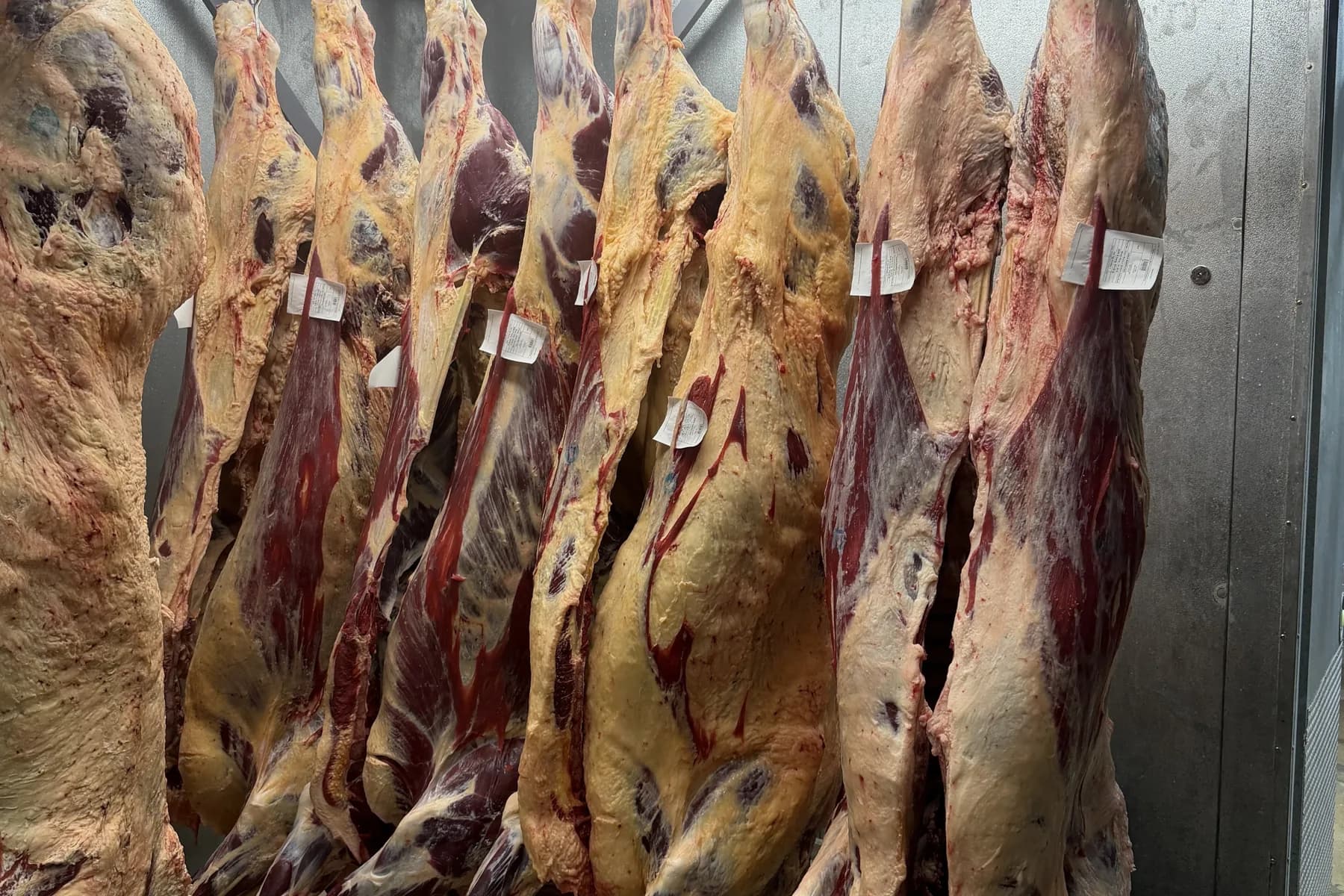
Hanging weight to take-home weight: where the other third goes
This is the drop that surprises people, because the carcass on the rail already looks like beef. Between the rail and your boxes, three things leave.
Water, during aging
Beef loses moisture as it ages. Dry-aged carcasses lose the most, up to several percent of their weight to evaporation. Wet aging in vacuum bags, which is how we age, loses less, but some purge still collects in the bag and is discarded. Aging is what makes the beef tender, so this is water you want to lose. How long beef should hang explains why.
Bone, during cutting
Roughly 15 to 20 percent of a carcass is bone. Every boneless choice on your cut sheet sends that bone out of the box: boneless ribeyes instead of bone-in, strips and filets instead of T-bones, boneless roasts, and grinding the round instead of taking bone-in cuts. Asking for soup bones and marrow bones brings some of it back as usable product.
Fat and trim
External fat is trimmed to a reasonable thickness on steaks and roasts, and heavy fat that does not belong in ground beef is removed. A fatter animal loses more here. If you render tallow, checking “kidney fat” on the cut sheet keeps several pounds of it.
The plain version of the 1,200 lb example is how much meat you get from a cow.
A worked example
| Item | Whole steer | One half |
|---|---|---|
| Live weight | 1,200 lb | n/a |
| Hanging weight (50 to 62% of live) | 600 to 744 lb | 300 to 372 lb |
| Take-home weight (about 36% of live) | About 430 lb | About 215 lb |
| Of which ground beef (about 40% of take-home) | 172 lb | 86 lb |
| Steaks (about 20%) | 86 lb | 43 lb |
| Roasts (about 20%) | 86 lb | 43 lb |
| Ribs, brisket, fajita, stew, cutlets (about 12%) | 52 lb | 26 lb |
| Bones and organs, if kept (about 8%) | 34 lb | 17 lb |
How your cut sheet moves the number
- Raises boxed weight: bone-in ribeyes, T-bones and porterhouses, short ribs and dino ribs, arm roast with the marrow bone, soup and marrow bones, keeping organs and kidney fat.
- Lowers boxed weight: boneless everything, grinding the round, declining bones and organs, a leaner grind ratio (more fat trimmed away).
- Does not change total, only category: patties and chili meat come out of the ground total; stew meat and cutlets come out of the round.
The full walkthrough is in how to fill out a beef cut sheet.
Why the distinction matters for your bill
Per-pound processors bill on hanging weight, not take-home weight. On a 700 lb carcass that means paying the per-pound rate on bone, fat, and water you will never eat. Our flat fee does not depend on either weight, which is one of the reasons we price that way. What processing costs in Texas runs the numbers.
Reading your weight report
Every animal leaves here with a report showing the carcass hanging weight recorded at harvest, the final boxed weight, and an itemized count of every package by cut. If the ratio between the first two numbers is anywhere in the ranges above, your beef came out the way it should. If you have a question about any line, call (817) 404-7405 and we will walk through it with you.
Read more on Texas beef processing, see flat beef processing prices, and beef processing near Weatherford.