Call to schedule: (817) 404-7405
Parker CountyBeef Processing

Cut Sheet

How to fill out a beef cut sheet

This is the actual sheet we hand you at drop-off, with every decision on it explained and what each choice costs you elsewhere on the animal. Read it once and the form takes ten minutes.

A beef cut sheet is the form that tells the processor how to turn one carcass into the packages you take home. Ours runs 16 numbered sections across three pages: steaks, brisket and fajita meat, stew meat and cutlets, ground beef and add-ons, ribs, specialty cuts, roasts, bones, and organs. You fill out one sheet per half.

Most sections say choose one. That is not a formality. Each cut comes from a specific muscle, and once that muscle is cut one way it cannot also be cut another. A ribeye steak and a standing rib roast are the same piece of meat. So are T-bones and strip-plus-filet. This page walks every section in the order it appears on the sheet.

Not sure yet? Bring the blank sheet to drop-off, or call (817) 404-7405 and we will fill it out with you. We do this every week.

Section by Section

Every decision on the sheet

Numbered the way the sheet is numbered. The rule for each section is in the small print; the trade-off is in the paragraph.

1

Rib

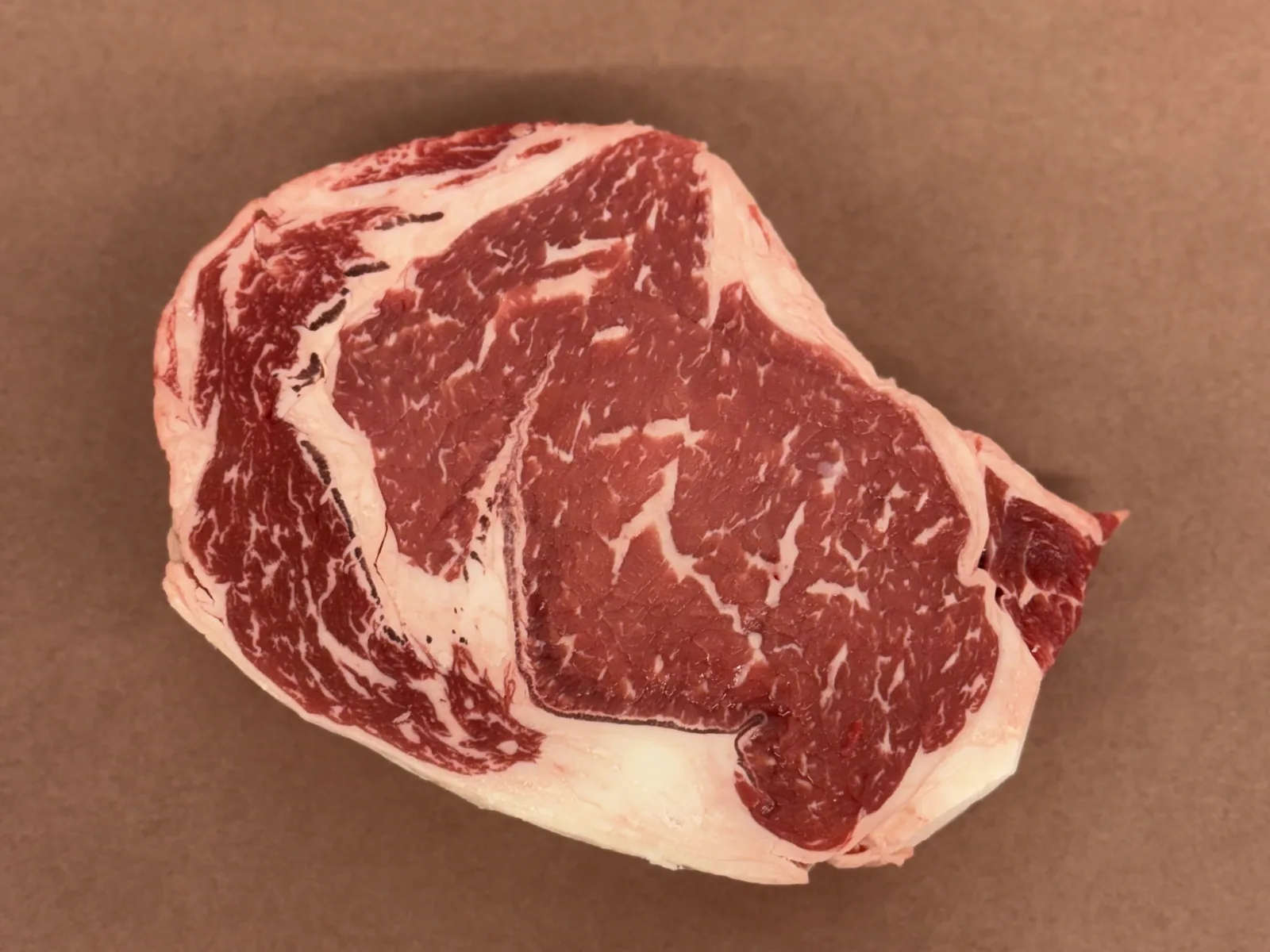
Ribeye

Choose one of four

  • Boneless ribeye steaks (set thickness)
  • Bone-in ribeye steaks (set thickness)
  • Boneless rib roast, whole or halved
  • Bone-in rib roast, whole or halved

A rib roast is the ribeye left whole. You get steaks or a roast from this section, not both. If you want one prime rib for the holidays and steaks the rest of the year, ask for the roast halved: one half stays a roast, and we can cut the other into steaks.

A boneless ribeye steak on butcher paper

2

Short Loin

Strip loin

Choose one of three

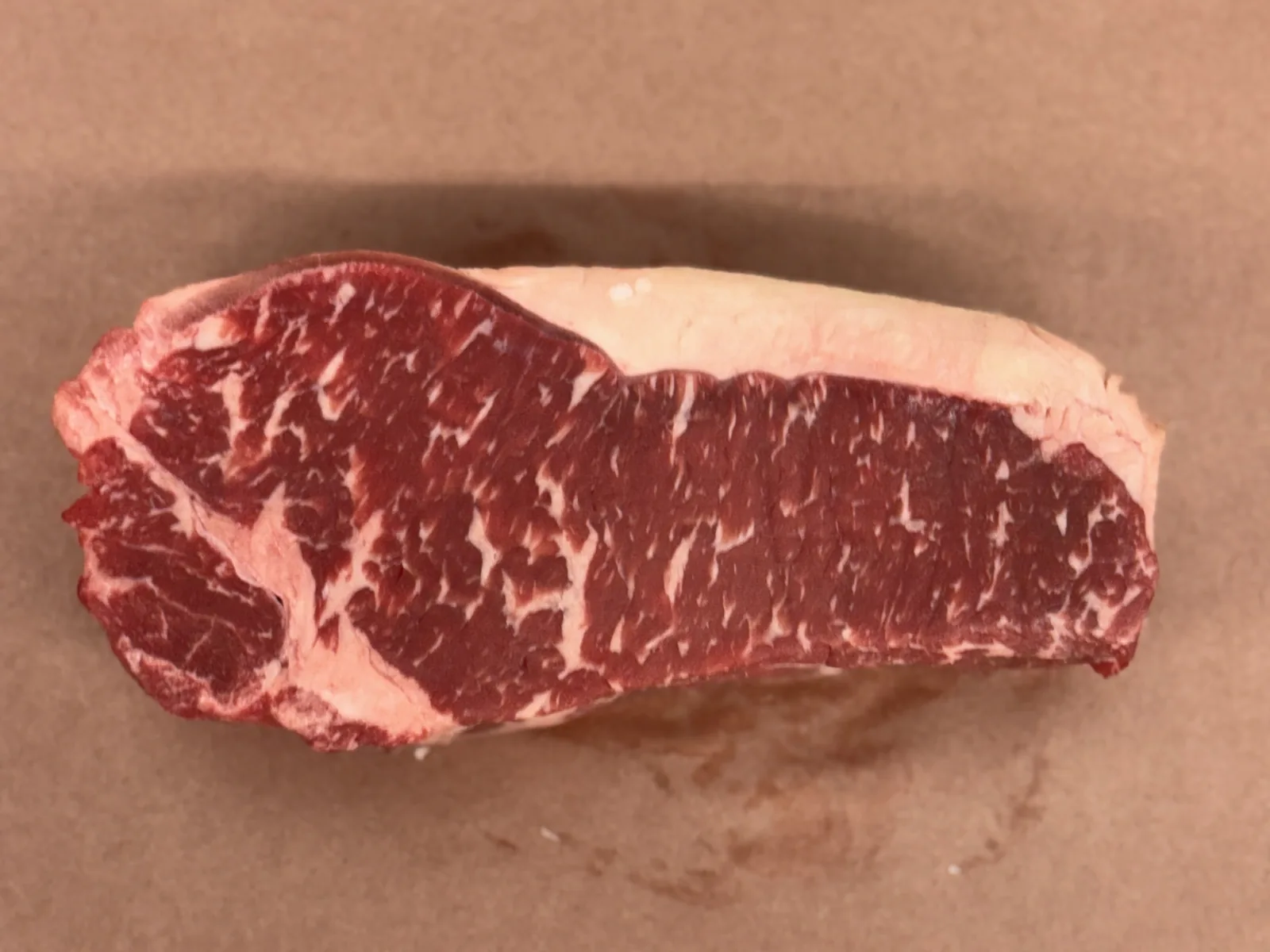
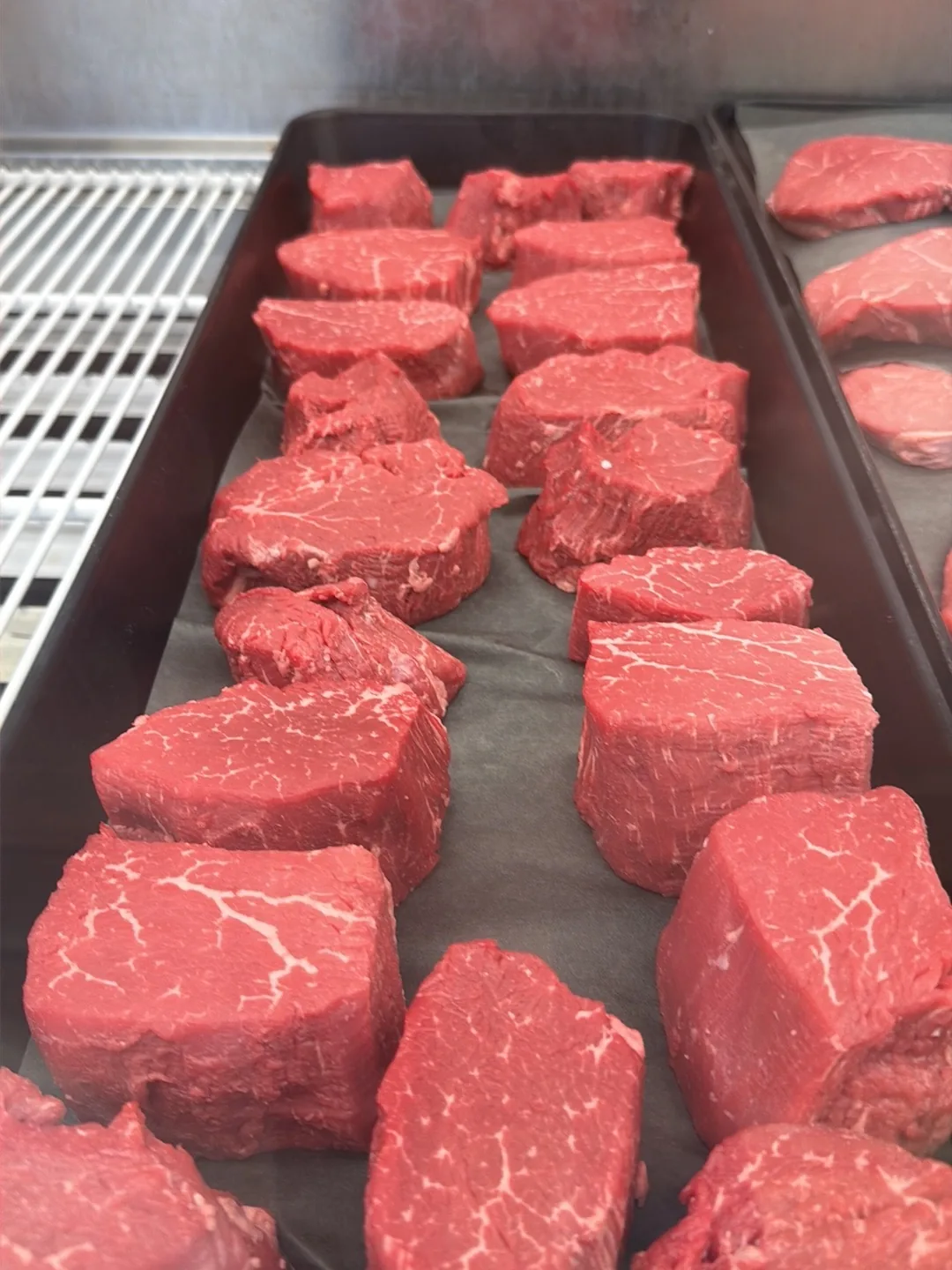
  • NY strip steaks plus tenderloin filets (most popular)
  • T-bone and porterhouse steaks
  • Whole strip loin plus whole tenderloin

The strip and the tenderloin sit on either side of the same bone. Leave the bone in and you get T-bones and porterhouses. Take it out and you get strips and filets as separate steaks. Same meat, two different dinners. One thing the sheet says in fine print and people miss: T-bones and porterhouses are not available on animals over 30 months old, because USDA rules on the vertebral column in older cattle. If your animal is older, pick strips and filets.

A New York strip steak on butcher paper

3

Sirloin

Sirloin

Boneless steaks only

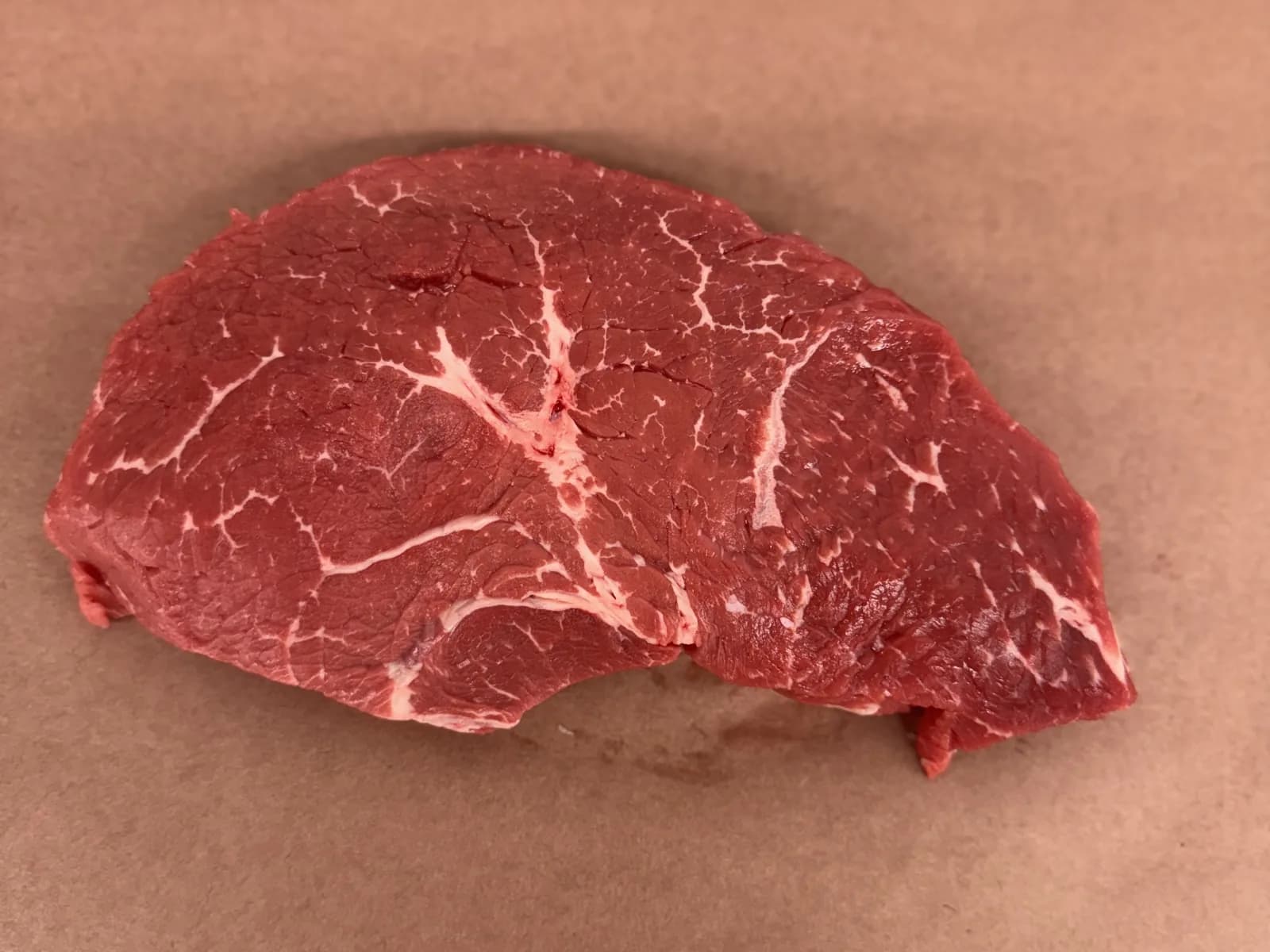
  • Sirloin steaks (set thickness)

Sirloin comes off as boneless steaks here. There is no sirloin roast option on our sheet. The two roasts that do come off the sirloin have their own lines further down: picanha and tri tip.

A top sirloin steak on butcher paper

4

Brisket

Brisket

Choose one of three

  • Whole brisket
  • Halved: point and flat packaged separately
  • Grind the brisket

In Texas this is rarely a question. Take it whole if you smoke. Halved is useful if a whole packer is more than you will cook at once. Grinding it makes very good ground beef and is not wrong, just uncommon.

5

Flank / Plate

Flank and skirt

Yes or no, each

  • Keep flank steak, or add it to ground
  • Keep skirt steak, or add it to ground

The two fajita cuts. Each is a separate yes-or-no. If you say no, the meat goes into your ground beef. Most people who cook fajitas at all say yes to both.

6, 15

Round

Cutlets and stew meat

Yes or no, plus pounds of stew

  • 8 oz beef cutlets, tenderized from the round (about 3 to 5 lb)
  • Stew meat, cubed from the round, 1 lb packages (you set the pounds)

Cutlets are the chicken-fried-steak cut. Stew meat comes off the round in cubes. Anything from the round you do not take as cutlets, stew meat, or roasts becomes ground beef.

7, 8, 9

Trim + anything you sent to grind

Ground beef, patties, chili meat

Set a ratio, then add-ons

  • Ground beef lean-to-fat ratio, for example 80/20
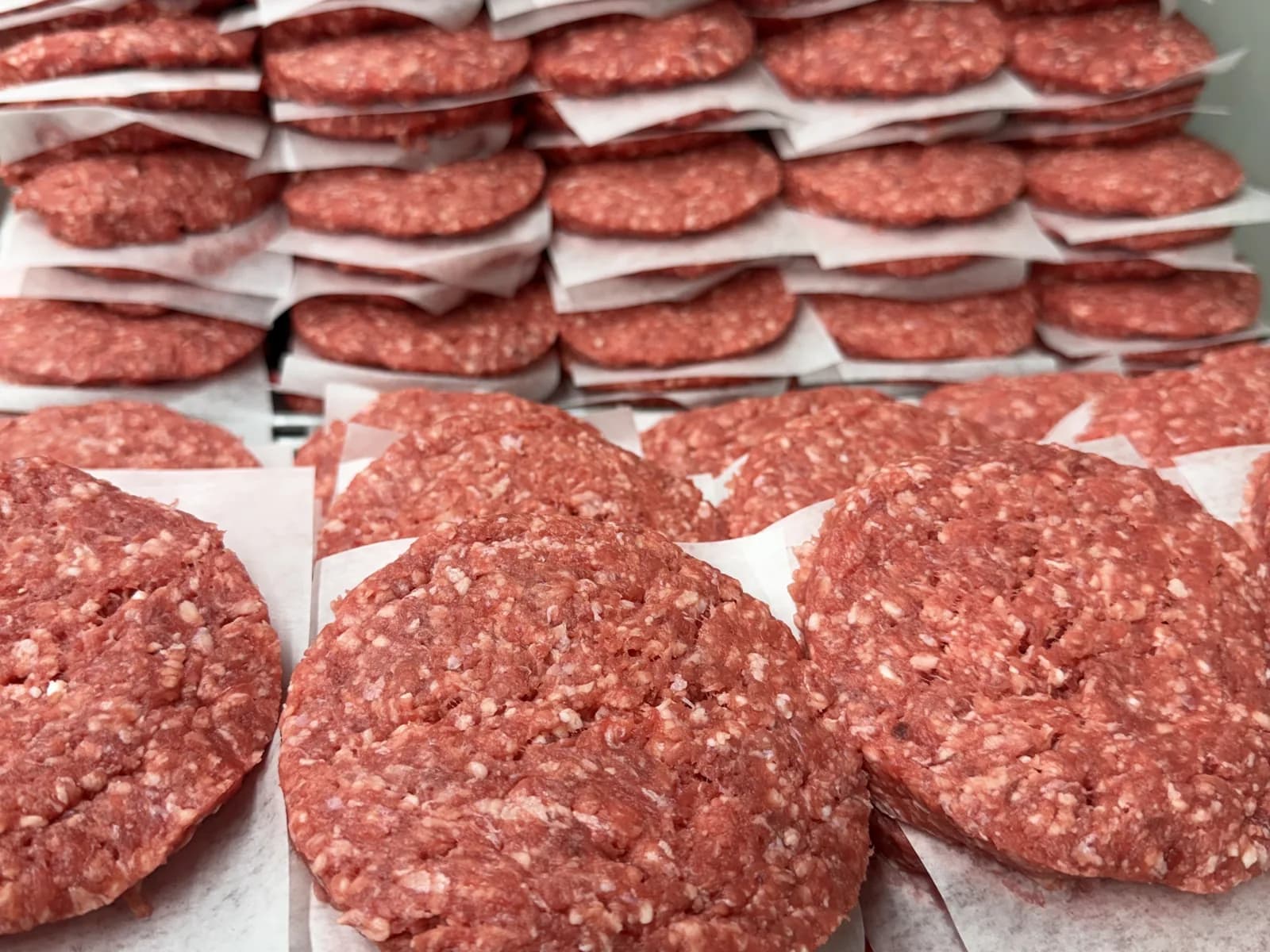
  • Hamburger patties: 1/3 lb, 3 per pack, 1 lb vacuum packages, ordered in 20 lb lots
  • Chili meat: coarse grind, 1 lb vacuum packages, ordered in 20 lb lots

Ground beef is made from the trimmings plus every cut you marked grind. Patties and chili meat come out of that same total, so 20 lb of patties means 20 lb less bulk ground. 80/20 is the all-purpose ratio. Leaner grinds are drier on the grill.

10

Plate

Ribs

Choose one of five

  • Short ribs: plate ribs about 6 inches long in 3 to 4 bone sections
  • Tablitas: cross-cut short ribs, 1/4 to 3/8 inch thick
  • Half short ribs, half tablitas
  • Dino ribs: full-length bone-in plate rib slabs
  • No ribs: all rib meat to ground

Tablitas are the grill-and-eat-in-ten-minutes cut. Short ribs and dino ribs want a smoker or a braise. Half and half is a good first-time pick if you are not sure which way you cook.

11, 12

Top and bottom sirloin

Picanha and tri tip

Choose one of three, each

  • Picanha: whole, steaks, or grind
  • Tri tip: whole, steaks, or grind

Picanha is the top of the top sirloin with its fat cap, the Brazilian steakhouse cut. Tri tip is the bottom sirloin roast. Both are excellent smoked whole. If you have never cooked either, take them whole. If you know you will not, grind is not a waste.

13

Chuck and Round

Roasts

Chuck: choose one. Others: yes or no

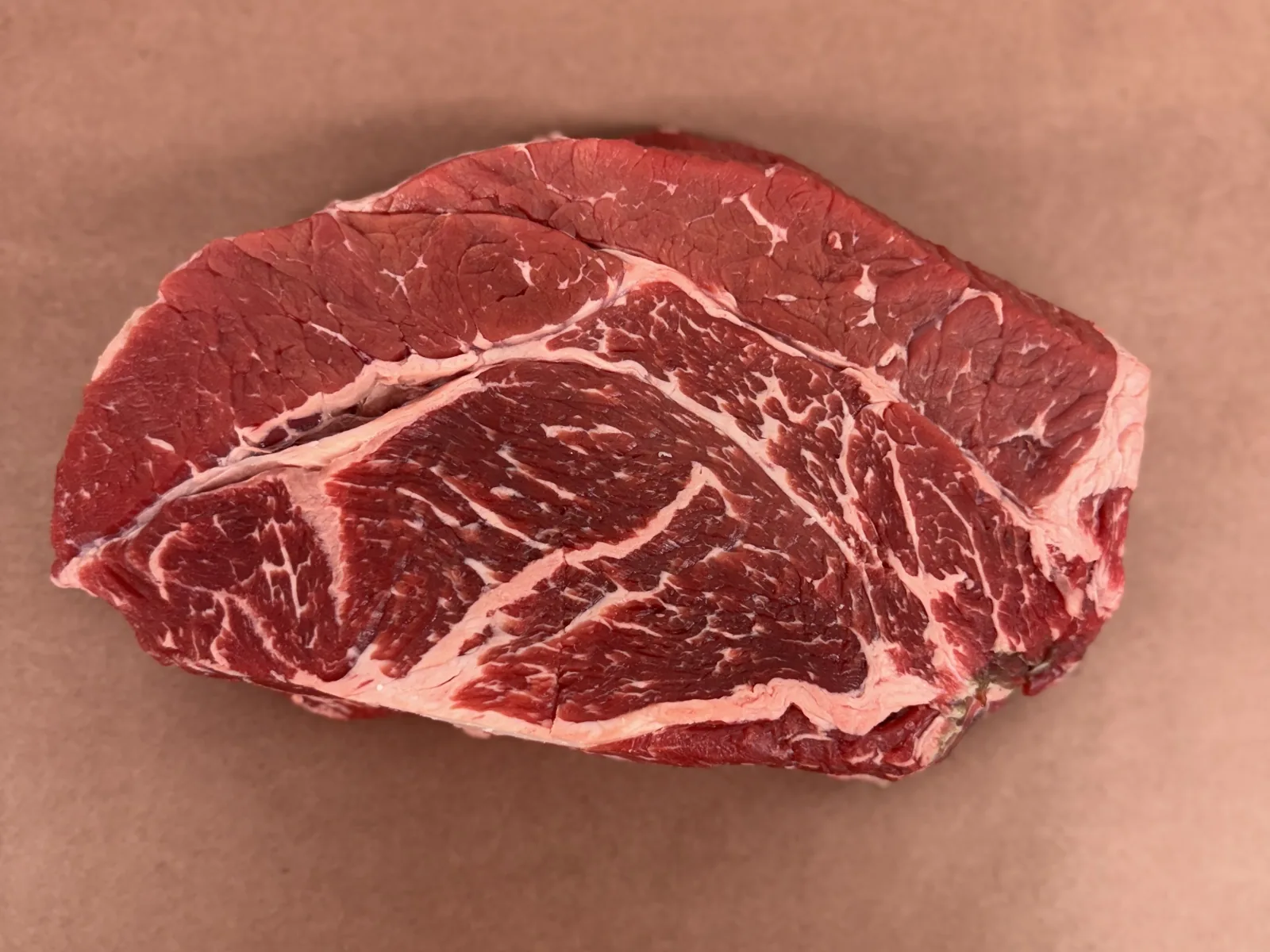
  • Chuck: chuck roast, chuck eye steaks, Denver steaks, or grind (one option only)
  • Pikes Peak roast: boneless rump roast, roast or grind, set size
  • Rump roast: leanest roast, roast or grind, set size
  • Arm roast: cross-cut from the shank with the marrow bone, roast or grind, set size

Chuck eye steaks and Denver steaks are cut from the same subprimals as the chuck roast, so picking either steak means no chuck roast. Set a roast size in pounds. Three pounds feeds four. Be honest about how many roasts you actually cook a year. Roasts nobody cooks are the most common thing still in the freezer when the next animal comes in.

A chuck steak on butcher paper, showing the blade seam

14

Shank and others

Bones

Yes or no, each

  • Soup bones: cross-cut shanks, osso buco style, with meat on the bone
  • Marrow bones: whole sections containing the marrow

Both are yes-or-no. They are already yours and they are free stock, so the default answer is yes unless freezer space is tight.

16

Offal

Organs

Yes or no, each

  • Heart (halved)
  • Liver (sliced)
  • Tongue (whole)
  • Oxtail (cross-cut)
  • Beef cheek (trimmed)
  • Beef fat: kidney fat for rendering tallow

Organs are discarded unless you check yes. Kidney fat is what you want if you render your own tallow. Availability is subject to USDA and food safety rules, which the sheet notes.

If You Are Stuck

A sensible first sheet

This is a suggestion, not our default. It leans toward steaks, keeps the Texas cuts whole, and sends the roasts most people never cook to grind. Change anything.

RibeyeBoneless steaks, 1 inch
Strip loinNY strips 1 inch plus filets 1.5 inch
SirloinSteaks, 1 inch
BrisketWhole
Flank and skirtKeep both
CutletsYes
Stew meat10 lb
Ground beef80/20
PattiesOne 20 lb order
Chili meatNo
RibsHalf short ribs, half tablitas
Picanha and tri tipBoth whole
ChuckChuck roast, 3 lb
Pikes Peak, rump, armRoasts, 3 lb each
Soup and marrow bonesYes to both
OrgansYour call. Kidney fat yes if you make tallow
Close-up of stacked ground beef patties ready for packaging
Patties: 1/3 lb, three to a pack, vacuum sealed in 1 lb packages.
Tenderloin filets cut to thickness and lined up on a tray
Filets, cut to the thickness written on the sheet.

What You Get Back

How your choices move the numbers

A half beef that hangs around 350 lb typically boxes out around 210 to 230 lb. Where that weight lands depends on the sheet.

Every steak or roast you decline becomes ground beef, so a sheet heavy on grind gives you more pounds of a cheaper product, and a sheet heavy on bone-in cuts gives you more pounds of box weight but less meat per pound. Neither is wrong. It is a question of what your family cooks.

Patties, chili meat, cutlets, and stew meat all come out of the same pool, so ordering 20 lb of patties does not add 20 lb to your total. It moves 20 lb from bulk ground into patties.

Your weight report at pickup shows the exact hanging weight, box weight, and an itemized count of every package, so the table here is a guide, not a promise. What the report includes.

Typical split of boxed weight, half beef

Ground beef (plus patties and chili meat)About 40%
SteaksAbout 20%
RoastsAbout 20%
Ribs, brisket, flank, skirt, stew, cutletsAbout 12%
Bones and organs, if keptAbout 8%

Approximate. Varies with the animal’s finish and how many bone-in cuts you choose.

Mistakes We See Every Week

Six things to get right the first time

Asking for ribeyes and a rib roast

One or the other from section 1. If you want both, ask for the roast halved and we will steak one half.

Picking T-bones on an older animal

Not available over 30 months. If we cannot cut them, we will call and switch you to strips and filets rather than guess.

Ordering roasts you will not cook

Every roast you skip becomes ground beef, which most families run out of first. Sending the rump to grind is not a waste.

Forgetting the free stuff

Soup bones, marrow bones, and kidney fat are discarded unless you check yes. Check yes.

Leaving thickness blank

Every steak line has a blank for thickness. Fill it in. If you leave it empty we have to call, and that slows down your beef.

Changing your mind by text

Changes to a cut sheet require your signature under our cut sheet policy. Call before cutting starts and we will get you a revised sheet to sign.

Questions

Cut sheet questions

How do I fill out a beef cut sheet?
Work top to bottom. For each numbered section, pick one option where it says choose one, check yes or no where it offers that, and write a thickness or size in the blank. Fill out one sheet per half. Download ours above, or call and we will fill it out with you over the phone.
Do I need one cut sheet or two for a half beef?
One sheet per half. If two families are splitting a whole animal, each family fills out its own sheet for its half.
What steak thickness should I choose?
One inch is the most common pick and cooks predictably. Three-quarters of an inch gives you more, thinner steaks that cook fast. One and a quarter to one and a half inch is the steakhouse cut and works best for a hard sear with a pink middle. Filets are usually cut thicker than strips.
Can I get T-bones and porterhouses?
Only from animals under 30 months of age. USDA rules on the vertebral column in older cattle mean we cannot cut bone-in loin steaks past that age. If your animal is older, choose NY strips plus tenderloin filets, which is the same meat boned out.
Can I get both ribeye steaks and a prime rib roast?
Not from the same side. Section 1 is one option only. The workaround is to choose the rib roast halved, then ask that one half be cut into steaks.
How are hamburger patties packaged?
One-third pound patties, three to a pack, vacuum sealed in one pound packages, ordered in 20 pound lots. Chili meat is a coarse grind in one pound vacuum packages, also in 20 pound lots. Both come out of your total ground beef.
How is the beef aged?
14-day wet age on subprimals. After harvest and inspection the carcass chills on the rail, then is broken into subprimals and vacuum-bagged to age for 14 days before cutting. That is most of the 2–3 weeks turnaround.
Can I change my cut sheet after drop-off?
Call as early as you can, before cutting starts. Changes require your signature under our cut sheet policy, so we will send a revised sheet for you to sign rather than take changes by text or voicemail.
Which organs can I keep?
Heart, liver, tongue, oxtail, beef cheek, and kidney fat for rendering, each as a yes-or-no on the sheet. Availability is subject to USDA and food safety regulations.

Not sure yet? That’s normal.

Nobody gets their first cut sheet exactly right. Call us and we’ll go through it together. Flat fee, $850 whole or $450 half, and the cut sheet is included.

Monday–Friday, 10am–6pm