Call to schedule: (817) 404-7405
Parker CountyBeef Processing

The Process

How it works

First time having an animal processed? Nothing here is complicated, and you don't have to know the vocabulary before you call.

  1. 01

    Call to schedule

    Harvest slots fill up, especially in fall. One phone call gets you on the calendar and gives us a rough head count.

  2. 02

    Settle your cut sheet

    We go through steak thickness, roasts, grind, and specialty items so the cutters know exactly what you want.

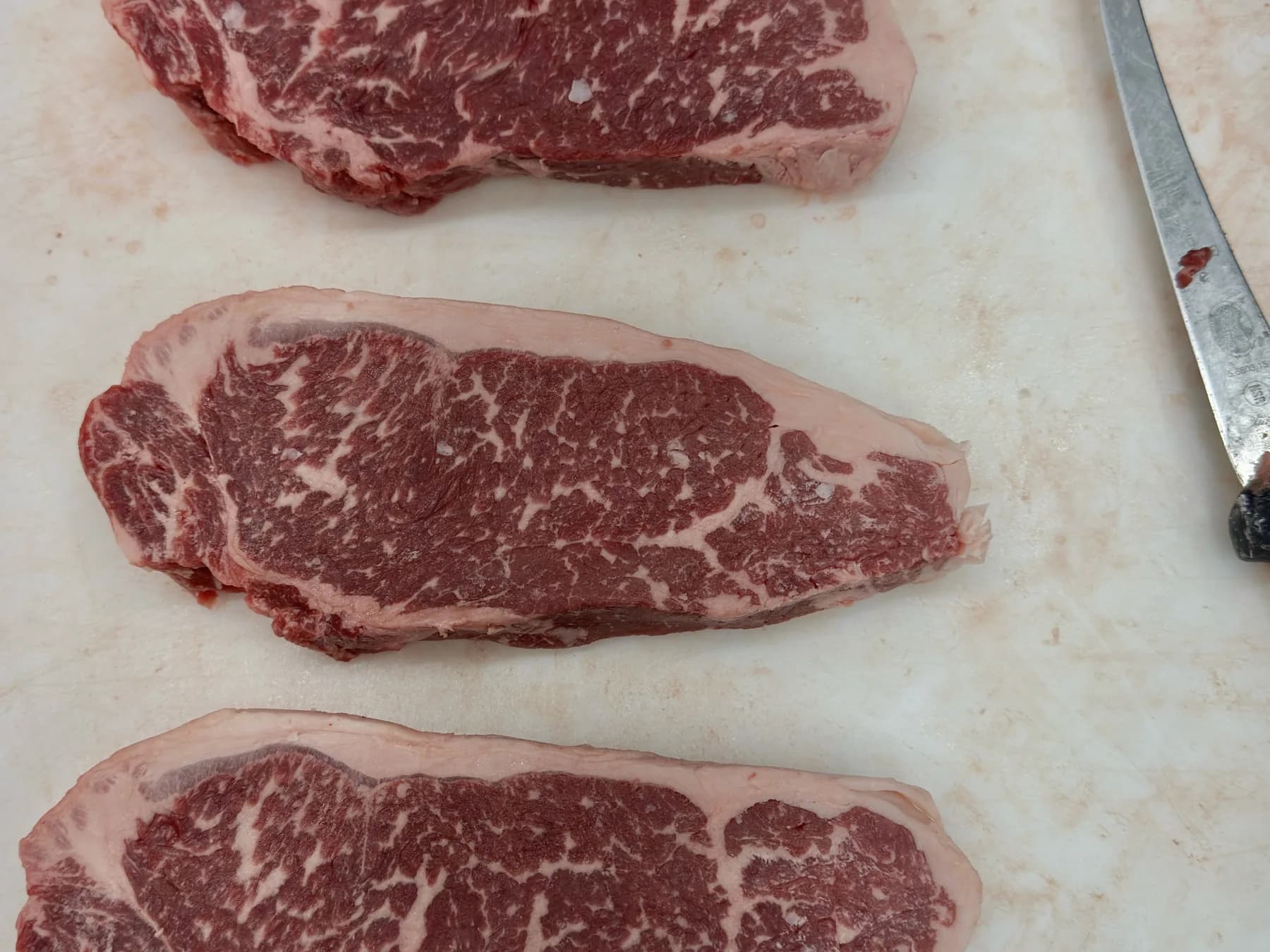
    Three marbled New York strip steaks on the cutting board next to a boning knife
  3. 03

    Drop off your animal

    Bring your beef on the scheduled date. We take it from there under full USDA inspection.

  4. 04

    Harvest & aging

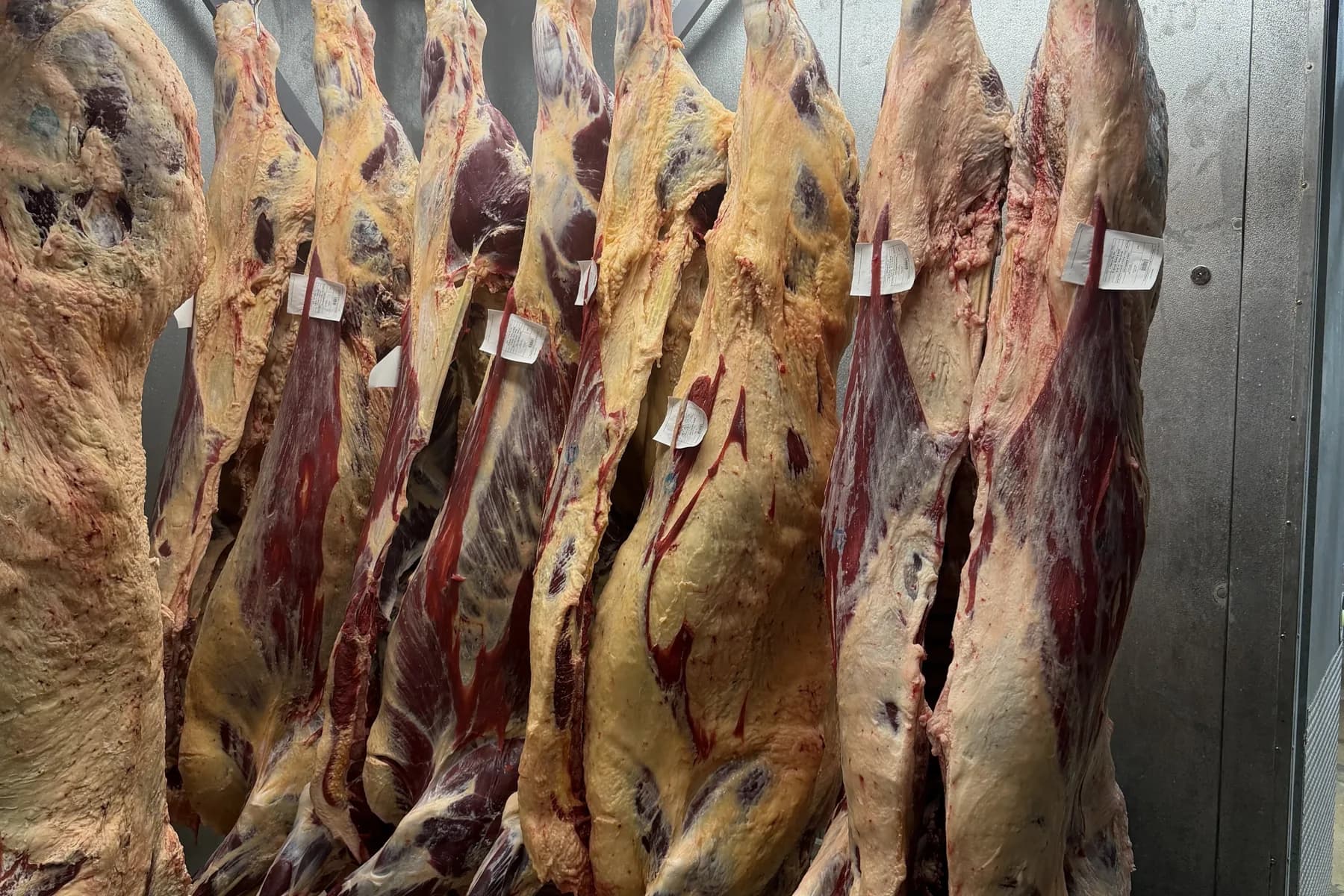
    Your beef is harvested, inspected, and hung to age properly. That's the step most people skip and always regret.

    A row of USDA-inspected beef carcasses chilling on the rail
  5. 05

    Cut, wrap & label

    Cut to your sheet, vacuum sealed, labeled, and boxed. Every package accounted for.

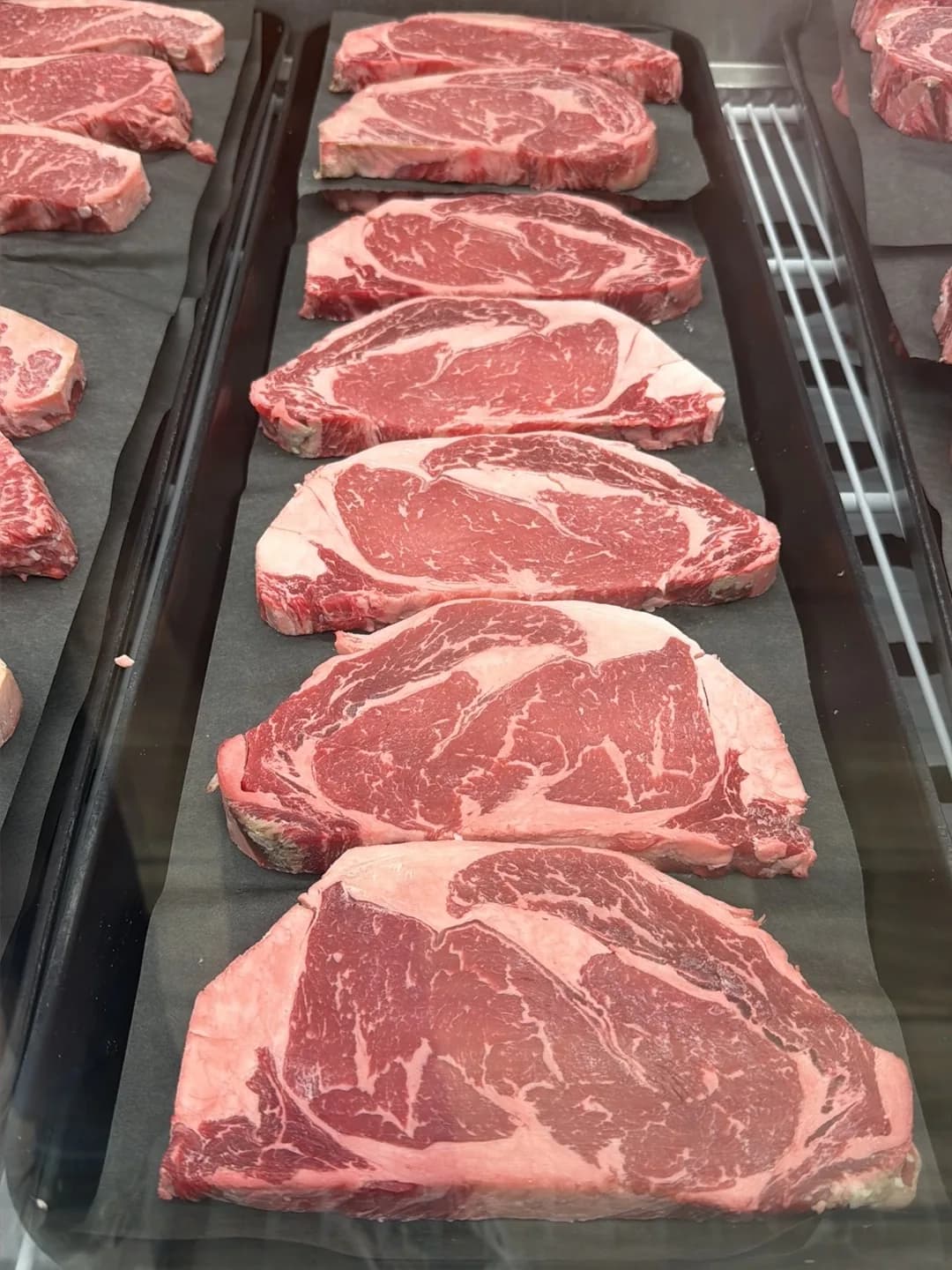
    Fresh-cut ribeye and strip steaks laid out on trays in the cutting room
  6. 06

    Pick up with your report

    Two to three weeks after drop-off you take home your beef plus a carcass and box weight report.

Step 2, made easy

Download the exact cut sheet we use, one page per half, and read our walkthrough of every decision on it.

Step 5, Up Close

How the cuts are packaged

Two machines, one rule: the package has to survive a year in a chest freezer and come out looking like the day it went in.

Steaks and ground: rollstock

Every steak is packaged on its own, and ground beef goes in 1 lb packages, on 6 and 9 mil film. That is much thicker than the industry runs, and it is why freezer burn is not a thing we hear about.

Everything else: vacuum sealed

Roasts, ribs, brisket, stew, cutlets, bones, and organs go in chamber vacuum bags, individually for roasts and by the pound for the rest.

Labeled, frozen, boxed

Each package is labeled with the cut, net weight, your name, the pack date, and the USDA mark, blast frozen, and boxed by half with your name on the box. Plan on up to 12 months in the freezer.

Timing

Why it takes 2–3 weeks

The wait is the aging, and the aging is the point.

After harvest and inspection, your carcass chills on the rail, then is broken into subprimals and vacuum-bagged for a 14-day wet age on subprimals. During that time the muscle’s own enzymes break down connective tissue, which is what makes a steak tender and deepens the flavor.

A plant that turns beef around in four days is skipping this. You can taste the difference, and so can anyone you sell to.

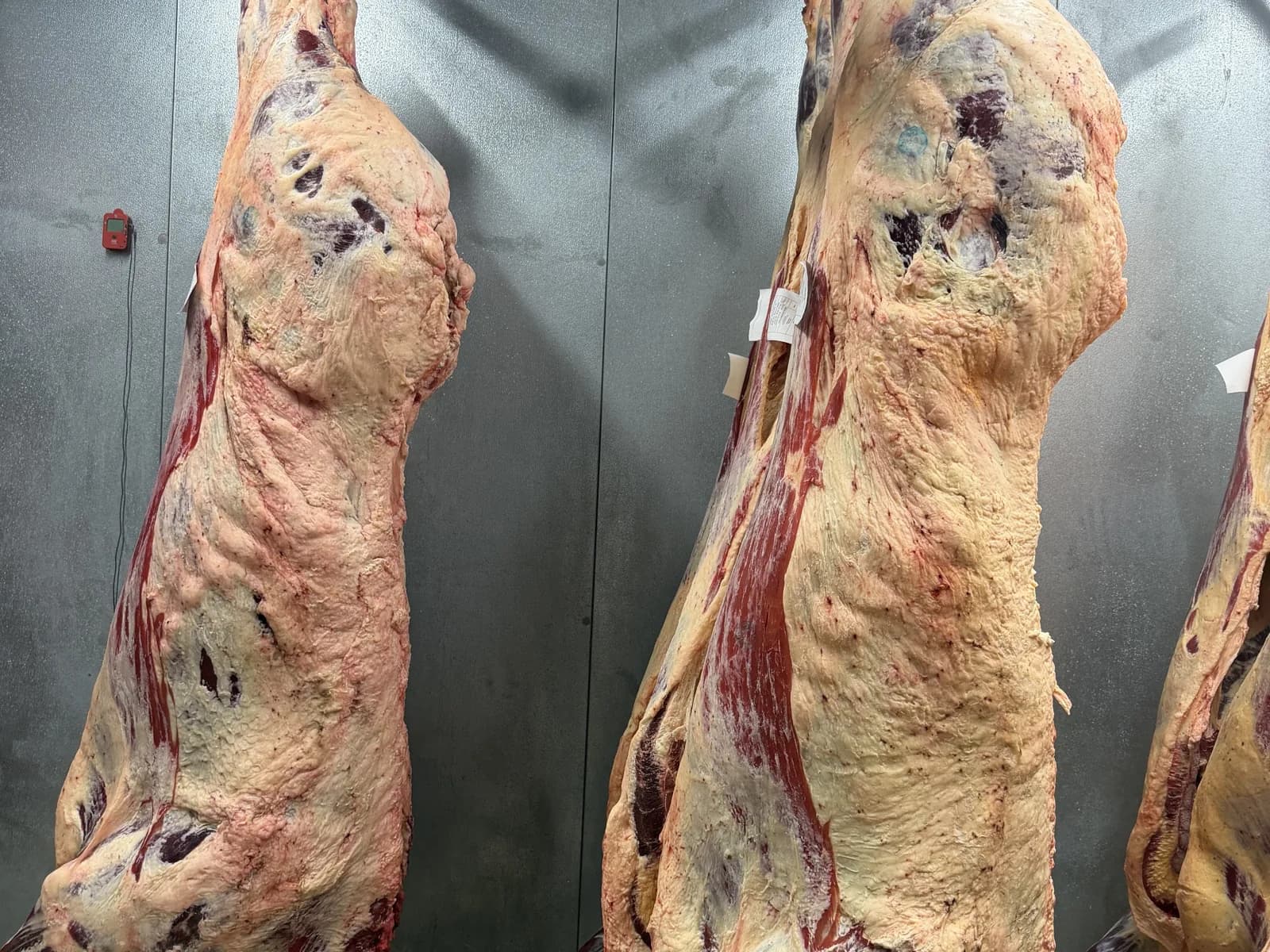
Two beef sides hanging in the cooler during the aging period
Sides chilling on the rail before they are broken down and bagged to age.

What You Get Back

Every package accounted for

Carcass hanging weight

The rail weight your beef graded out at, recorded at harvest.

Final box weight

What you're actually carrying home after cutting and trimming.

Itemized inventory

A complete list of every cut and package, so nothing is unaccounted for.

Start with a phone call

Tell us roughly when your animal will be finished and we’ll find you a slot.

Monday–Friday, 10am–6pm