
A show steer ends one of two ways. It goes through a terminal sale and ships to a packer, or the family keeps it, or the buyer gives it back, and it comes to a plant like ours to be processed into beef for the freezer. If you are on the second path, two things are different from processing any other beef: show animals get extra scrutiny from the USDA inspector, including residue testing, and show week is the hardest time of year to get a harvest date. Both are manageable if you know about them before the show.
First: tell us it is a show steer
When you call to schedule, say the words “show steer.” We are not asking to be nosy. Under federal inspection, animals that come from a fair or livestock show are handled as their own category, and the USDA inspector on our floor is required to treat them differently from a pasture steer that walked off a trailer. We would rather plan for that than find out on harvest day.
Why the USDA looks harder at show animals
Show animals have, as a group, a worse history of drug residues than ordinary fed cattle. Some of it is aggressive feeding programs and implants right up to show day. Some of it is treating an animal for stress or illness on the road and losing track of the withdrawal time. Some of it, historically, has been outright prohibited compounds used to change how an animal looks in the ring. The Food Safety and Inspection Service knows all of this, and its residue program says so.
What that means on our floor, in plain terms:
- Show animals are a separate lot. All the show animals presented on a given day from one show are grouped, and every one of them has an equal chance of being sampled.
- The inspector screens them for drug residues. FSIS directs inspectors to perform a kidney inhibition swab, a rapid on-site screen for antibiotic and sulfa residues, on show animals presented for slaughter. On an ordinary steer that screen is used when something looks off. On a show steer it is the standing procedure.
- Tissue samples for beta-agonists. If a state health or agriculture official or a show board asks for it, or if there are reports of beta-agonist use at that show, the inspector collects tissue for laboratory testing for compounds like ractopamine, zilpaterol, and clenbuterol.
- Anything suspicious gets tagged. Injection sites, signs of recent illness, or an animal that does not look right is tagged “U.S. Suspect” and tested regardless of where it came from.
What to stop, and when
Every product that goes into or onto a show animal has a label, and the label has a withdrawal time, the number of days that must pass between the last dose and harvest. Withdrawal is not about the show date. Show rules usually require that withdrawal be complete by show day, but harvest may be days or weeks after the show, and anything given at the show restarts the clock.
| Product type | What to check | Typical concern |
|---|---|---|
| Feed additives, including beta-agonists | Label withdrawal, plus your show's rules. Many Texas shows ban beta-agonists outright | Fed right up to show day; some compounds are prohibited everywhere |
| Antibiotics, injectable or oral | Label withdrawal in days, which for some products is 30 days or more | Treated for shipping fever or foot rot on the road and not recorded |
| Implants | Most have no withdrawal, but confirm the specific product | Placed late in the feeding period |
| Dewormers and pour-ons | Label withdrawal, often several weeks | Applied at weigh-in or validation and forgotten |
| Anything compounded, off-label, or shared from another exhibitor | Do not use. There is no label to check | This is where the prohibited-substance cases come from |
Withdrawal periods still have to be finished before harvest. You do not need to bring treatment records or show release papers. A family that can answer “last antibiotic was on this date, withdrawal is this many days, harvest is after that” has a boring harvest day, which is the goal.
Scheduling around show week
Every county show in North Texas releases its market steers within a few days of each other, and every family with a steer that did not sell to a packer wants the same harvest dates. Call before the show, not after. Give us the show release date and we will hold a slot. If the steer places and sells, cancel the slot and someone else uses it. If the steer comes home, you are already on the calendar.
Live cattle drop-off is Monday through Friday from 6:30am, and you should arrive before 8am. Pickup is Monday through Saturday, 10am to 6pm. Show releases often land on a Friday afternoon or a weekend, so plan to hold the animal a few days at home, which also gives any last-minute treatment time to clear. Do not drop feed entirely, but bring the animal in with a few hours off feed so the harvest is cleaner and the hanging weight is honest.
What a show steer yields
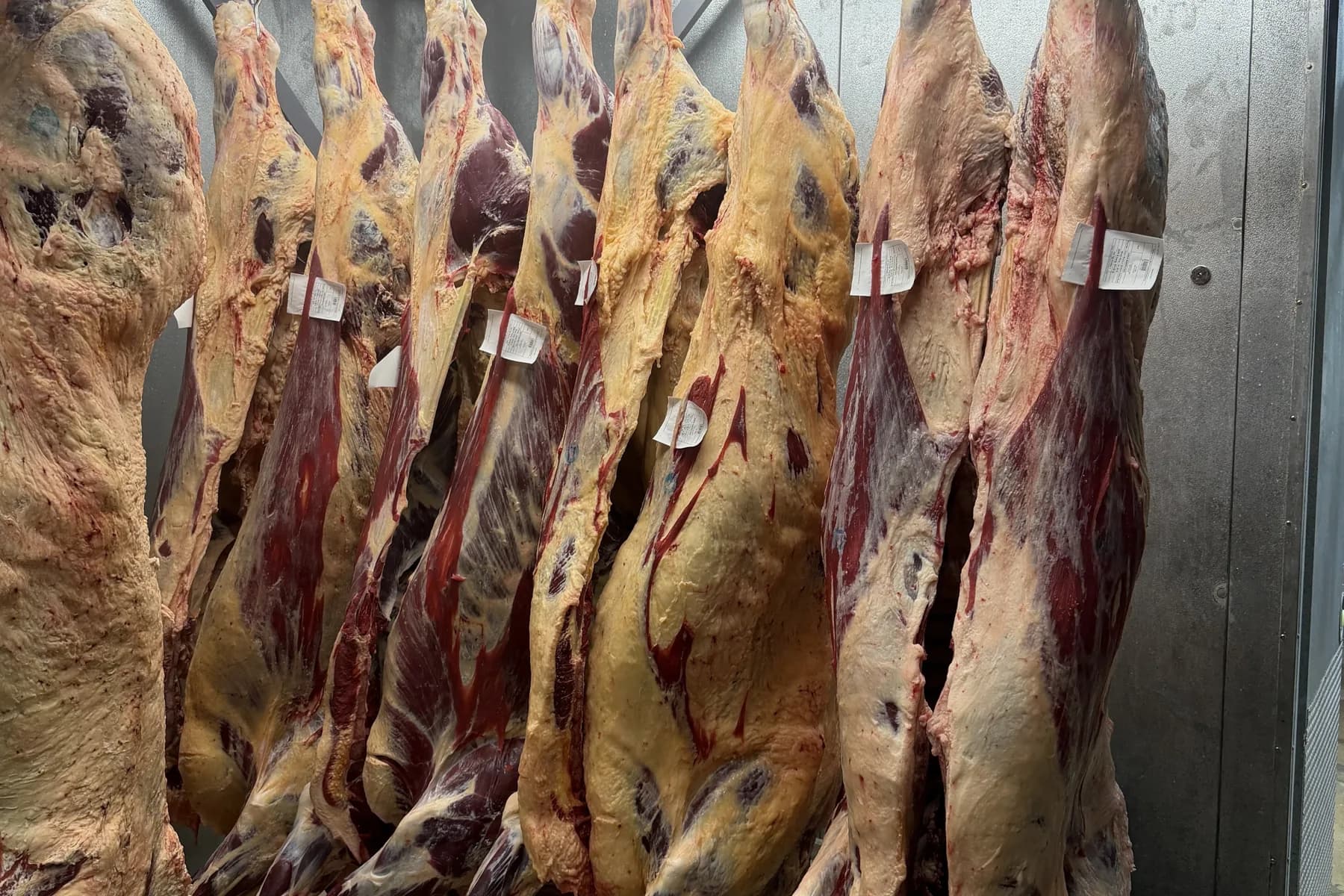
Show steers are fed to a hard finish, so they are heavier and fatter than a pasture-finished animal of the same frame. That shows up everywhere in the numbers.
| Item | Typical pasture-finished steer | Typical show steer |
|---|---|---|
| Live weight | 1,100 to 1,250 lb | 1,250 to 1,400 lb |
| Dressing percentage | 50 to 62% | High end of 50 to 62% |
| Hanging weight | 50 to 62% of live weight | High end of that range |
| Marbling | Select to low Choice | High Choice to Prime |
| External fat trim | Moderate | Heavy; more trim, more kidney fat |
| Boxed weight | 50 to 62% of hanging, about 36% of live | High end of 50 to 62% of hanging |
Three cut-sheet suggestions specific to a show steer:
- Take the steaks thicker. This is the most marbled beef your family will ever own. Inch-and-a-quarter ribeyes and strips do it justice; three-quarter-inch steaks waste it.
- Keep the kidney fat. A show steer carries a lot of it, and it renders into excellent tallow. Check yes on the sheet.
- Consider patties for the sponsor. Families often thank the buyer with beef. Twenty pounds of patties is an easy, welcome box.
The full walkthrough is in how to fill out a beef cut sheet, and the sheet itself is a free PDF.
Splitting the beef, or giving some to the buyer
Many show steers end up shared: half to the family, half to grandparents, or a box of steaks to the sponsor who bought the animal at the sale and handed it back. Because we operate under USDA inspection, every one of those arrangements is legal. The beef can be sold by the cut, given away, or split any way you like, and each half can have its own cut sheet. A custom-exempt plant cannot offer that; its packages are stamped NOT FOR SALE and may only go to the animal’s listed owners. The difference is explained in USDA vs. custom-exempt vs. state-inspected.
The price
Same as any beef: $850 for a whole animal or $450 per half, with USDA inspection, harvest, cutting, vacuum sealing, labeling, freezing, aging, and patties included. There is no hanging-weight fee. A heavier show steer costs the same as one that hangs 650. At a per-pound plant the heavier show carcass is exactly where the bill climbs; the comparison is in what processing costs in Texas.
North Texas show calendar
Dates we have confirmed are marked. For the others, check the show website each fall. Whatever the date, call us the week before the show.
| Show | Where | When |
|---|---|---|
| Hood County Junior Livestock Show & Sale | Granbury | January 4 to 9, 2027 (confirmed) |
| Fort Worth Stock Show & Rodeo, Junior Market Steers | Will Rogers Memorial Center, Fort Worth | Show runs January 15 to February 5, 2027; market steers show February 4 to 5 (confirmed) |
| Erath County Junior Livestock Show | Stephenville | January 2027 |
| Johnson, Palo Pinto, Jack, and Wise county shows | Cleburne, Mineral Wells, Jacksboro, Decatur | Winter, typically January through March |
| Tarrant County Junior Livestock Show | Will Rogers Memorial Center, Fort Worth | Late February to early March |
| Parker County Stock Show (PCLIA Youth Fair) | Parker County Showgrounds, Weatherford | Early June (2026 was June 5 to 10, Sale of Champions June 12) |
The short version
- Call before the show and hold a harvest date.
- Write down every product and date for the last 60 days.
- Make sure every withdrawal is finished before harvest, not before the show.
- Tell us it is a show steer.
- Fill out the cut sheet with thicker steaks and yes on kidney fat.
- Pick up in 2–3 weeks with a weight report and beef you can legally share or sell.
Questions about a specific animal or a specific show? Call (817) 404-7405.
Sources
- FSIS Directive 10800.1, Residue Sampling, Testing and Other Verification Procedures Under the National Residue Program, including its provisions for show animals.
- Texas 4-H and FFA Livestock Program ethics policy on withdrawal times, testing, and prohibited substances at Texas shows.
Read more on USDA beef processing in Texas, see flat beef processing prices, and beef and cattle processing near Fort Worth.